Showing posts with label ultraviolet. Show all posts

Wednesday, February 15, 2017

Sunprints!

We've been working on our second shape unit in math, which focuses on combining shapes to form larger shapes and pictures.  In science, we've been learning about the sun and how it provides light and heat.  What better way to combine science and math than making a sunprint with shapes!?

I first learned about sunprints when my sister ordered a little stocking stuffer for me from Restoration Hardware.  They always have the coolest stocking stuffers.  I had a ton of fun making them using items I found in nature, and I figured the kids would be intrigued by the idea, too.


First, students had to design a picture using attribute blocks.
Once they set their blocks on the sun-sensitive paper, we carefully took them outside to expose them.


The part exposed to uv light changes from blue to white.  


When we came back inside, we had to rinse the paper in water.  This step is like magic!
The white part turns a dark blue and the part that was blue (where the shapes were) turns white.


As the paper dries, the part exposed to the sun turns darker and darker blue.  
Once dry, we matted the prints and let the students sign their art!


If you're interested in doing this at home or in your classroom, you can click the first picture above (super sunprint kit) to find the kit for sale on Amazon.  That's the same one I used and includes everything you need!

We also explored how sunscreen and sunglasses protect us from UV rays using some sun-sensitive beads.


The beads change color when exposed to UV light, so properly working sunscreen or sunglasses will prevent the beads from changing color.  You can find the beads here!

This week, now that the sun is in full force again(!), we'll experiment with a solar oven!


Thursday, February 11, 2016

The Sun & Its Energy: Experimenting with UV Color Changing Beads!


This lesson from the National Energy Education Development Project was the coolest.

Here's how it went down in our classroom:

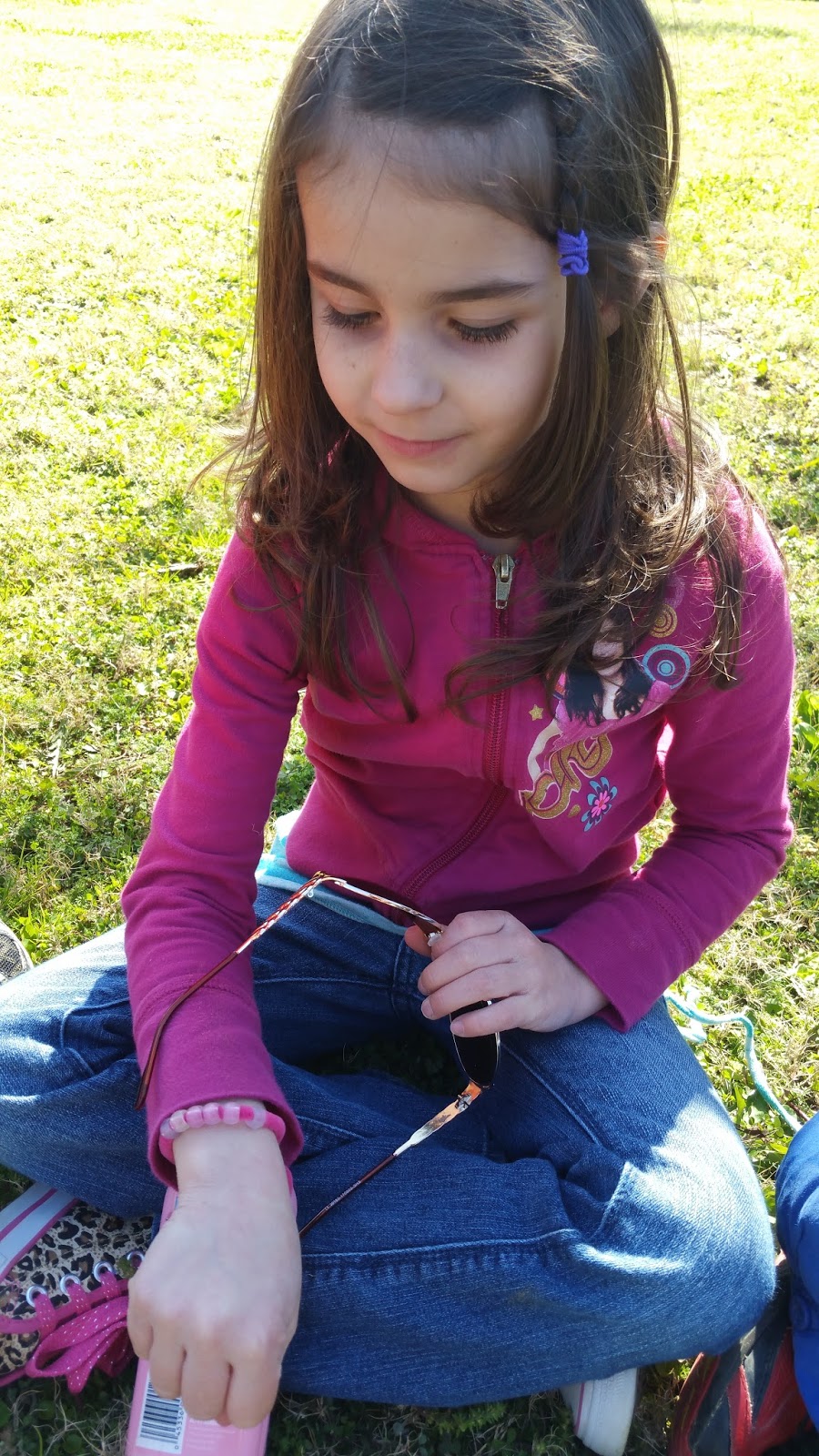
1. On Wednesday, I told the kids they needed to bring sunscreen and a pair of sunglasses the next day.  I didn't tell them why.  I did put a note about the experiment in their folders, though.    (This led one of my students to tell her mom she needed to wear her bathing suit under her clothes and bring flip flops and a towel to school. Haha! I like the strong association between sunglasses, sunscreen and a beach or pool environment. It's definitely not warm enough for that!)

2. This afternoon when we came in from recess, I had the beads and pipe cleaners sitting on each student's desk. The kids knew we were doing something fun for science (which is right after recess,  but before math) and that they needed the sunscreen and sunglasses.   They didn't know anything about the beads.  So I told them, "Hey guys, before we can go outside to do our science experiments, I need you to put something together that we're going to need for math. On your desk you have six beads and a pipe cleaner. I need you to thread the beads on and Mrs. Dean and I will attach the bracelet to your wrist.  I just want to be ready for math as soon as we come back in." Now, the room was dimly lit with our lamps and closed blinds, but the kids are used to that during writing time and other parts of the day, so they didn't think anything of it.


3. Then we went outside with our new 'math' bracelets, sunscreen and sunglasses. I recorded as we went outside, because I wanted to catch their reaction when they saw the beads changing color. You can see the video and more photos from the day by clicking below.


4. We discussed what could have caused the change in the color of the beads. The kids narrowed it down to the sunlight. We talked about how the sun's energy comes in waves and that one type of wave is ultraviolet radiation, or UV rays. The UV rays from the sun caused a quick chemical reaction in our beads.  This led to a great conversation about how UV radiation can harm your eyes and cause your skin to tan, burn, and age.  

5. Next we got to test out our protective gear! We placed our sunglasses over our bracelets in the sun.  If our beads changed back to a white/clear color, we knew that our sunglasses were doing a good job blocking the UV rays.


6. Once we tested our sunglasses, we put some sunscreen on ONE bead only.  If our sunscreen worked (wasn't expired, was applied properly), then that one bead would turn back to white.  It was pretty neat to see that my bead initially stayed colored even with an application of sunscreen but a student who used my same sunscreen had hers turn white.  The difference? She used way more sunscreen than I did! When I applied a second coat, mine also turned back to white.


We could have done so many more extensions on this... 
-Whether the SPF Protection Factor makes a difference
-Whether or not water would take the sunscreen off a significant amount
-Whether or not clothing in various colors can block UV rays


Want to buy your own set of color changing beads? Here's the same pack of 1,000 for $11.99 on Amazon!